Working together to address deforestation and poverty in Indonesia
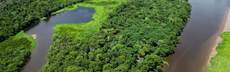
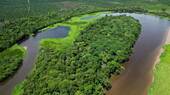
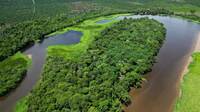
Indonesia offers more than just the stunning beaches of Bali. The country is also home to some of the largest tropical ecosystems and the world’s third-largest tropical rainforest. These can help to mitigate climate change. At the same time, there is significant economic potential: around 30% of Indonesia’s surface area is used for agriculture, providing employment for roughly one third of the population.
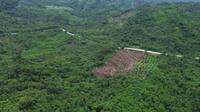
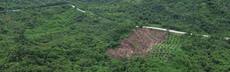
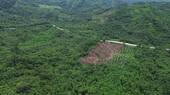
However, large swathes of rainforest continue to be cleared to make way for palm oil plantations, which has negative global consequences but also exacerbates local problems such as flooding. Although the situation has improved in recent years, deforestation and forest fires are still responsible for around 60% of the country’s CO2 emissions. In addition, many smallholders still live in poverty and suffer from poor working conditions.
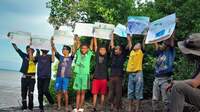
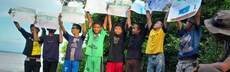
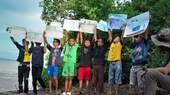
This is where SECO’s economic development cooperation comes into play, taking a holistic approach. In selected Indonesian palm oil regions on the islands of Borneo and Sumatra, Switzerland facilitates cooperation between producers, local government, civil society and the private sector. As a result, monitoring and warning systems have been set up in the rainforest to prevent illegal fires and deforestation. Sustainable farming methods have been introduced and new forest protection laws have been enacted. Smallholders have been able to diversify their sources of income so that they are no longer solely dependent on palm oil. Switzerland is also engaged in national policy dialogue to raise living standards and improve environmental stewardship across the country.
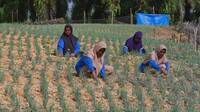
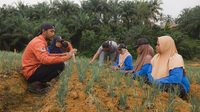
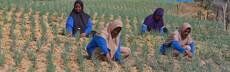
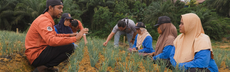
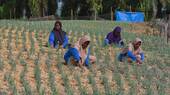
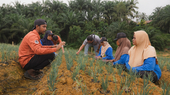
To give a concrete example, for many households, plantation work – traditionally carried out by men – remains the main source of income. Women often manage the household and family finances, but would benefit from greater economic participation. A promising solution has emerged in the village of Bukit Harapan. Here, women have set up a business to grow vegetables and process rejected shallots into fried products. Their success drew the attention of a leading Indonesian vegetable seed producer, which now provides technical support and is introducing new seed varieties. This model gives women full control over production and marketing decisions, provides them with independent income and reduces overall dependence on palm oil.
From 2023 to 2025:
• 850,000 hectares of natural ecosystems protected and 823 hectares of devastated land were restored;
• working conditions improved for 2,615 workers in palm oil companies;
• 5,650 farmers obtained certification for sustainable palm oil production;
• nearly 30 anti-deforestation regulations were introduced;
• USD 6.76 million in private sector investment was secured to ensure the long-term continuation of existing projects.
Indonesia is the largest economy in Southeast Asia and thus a key driver of the global economy. Switzerland is therefore keen to maintain good economic ties and signed a free trade agreement with Indonesia in 2018. Swiss public concerns regarding sustainable production of palm oil and deforestation are now being addressed by the projects described above.
Scrollen, um weiterzulesen
Wischen, um weiterzulesen
Wischen, um Text einzublenden

 Working together to address deforestation and poverty in Indonesia






 Working together to address deforestation and poverty in Indonesia